

Table of contents
State-of-the-art technology.
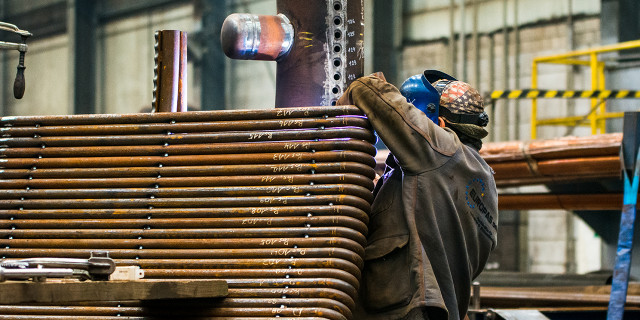
We are active in boiler construction and require high-quality bent tubes on a daily basis. For this reason, we invested in our machinery again in 2025 and purchased a hydraulic press brake from Schwarze-Robitec in Cologne, model SR 60 DB.
Custom manufacturing.
Our bending machine features a state-of-the-art NC control system and is capable of achieving a wide range of bending radii up to a maximum of 1D. It is ideally suited for single-part deliveries and small-batch production.
We offer tube bending for the following cross-sections on a contract basis using a wide variety of steel, stainless steel, and copper materials:
- Ø 31.8 mm
- Ø 33.7 mm
- Ø 38.0 mm
- Ø 42.4 mm
- Ø 44.5 mm
- Ø 51.0 mm
- Ø 54.0 mm
- Ø 60.3 mm
Please feel free to inquire about the respective bending radii directly with our production management. If we do not have a tool available for a specific radius, we are sure to find a solution together. Just contact us!
Table of contents
- Tube Bending: A Comprehensive Guide to Tube Processing
-
Introduction to Pipe Bending
- What Is Pipe Bending?
- The Importance of Pipe Bending in Industry
- Overview of Tube Bending Technologies
Tube Bending: A Comprehensive Guide to Tube Processing
Welcome to our comprehensive guide to tube bending! This article offers you a detailed look into the world of tube processing, from the basics to advanced techniques. We will explore the various aspects of tube bending, including its definition, importance in the industry, and the different technologies used in this field.
Introduction to Pipe Bending
What Is Pipe Bending?
Tube bending is a tube processing method in which tubes and profiles are permanently deformed to achieve a desired shape or a specific radius. This bending process is usually performed through cold forming, but can also be carried out with the application of heat. The goal is to alter the shape of the tube without compromising the material properties or structural integrity. The quality of tube bending depends heavily on the technique used and the machinery available. Precision is crucial, as bent tubes are often used in complex assemblies.
The Importance of Pipe Bending in Industry
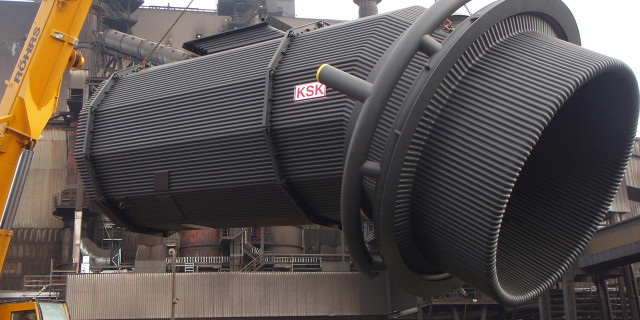
Tube bending plays a crucial role in many industrial sectors. Bent tubes are used in water-cooled systems, water-cooled aftercooling systems for industrial applications, and in industrial cooling, such as in systems for the melting process. The ability to bend tubes according to specific drawings enables the production of custom-made bent parts that are perfectly tailored to the respective requirements. Companies such as KSK GmbH utilize the precision and flexibility of tube bending to develop efficient and reliable systems. KSK GmbH is a company that uses bent tubes in its mechanical processes. Tube bending enables the creation of complex structures that would not be feasible with straight tubes.
Overview of Tube Bending Technologies
Tube bending technology encompasses a wide range of processes. Some examples include:
- Mandrel bending
- Roll bending
- Free-form bending
In roll bending, the tube is guided through several rollers to achieve the desired radius. The choice of the right technique depends on various factors, such as the tube material, diameter, wall thickness, and desired radius. Modern machinery enables high precision and repeatability in tube processing. This is the only way to meet the highest quality standards. KSK GmbH relies on modern technologies and qualified employees to consistently achieve the best results. Our many years of experience in this field enable us to reliably solve even complex tasks.
Pipe Bending Techniques and Processes
Manual vs. automatic tube bending
The decision between manual and automatic tube bending depends heavily on the specific requirements of the project. KSK GmbH uses both methods to offer its customers the optimal solution. Various factors play a role here:
- Manual techniques, often performed using pipe benders, are well-suited for one-off pieces or small batches where flexibility and quick adjustments are required. The craftsman’s experience plays a decisive role here in precisely achieving the desired shape and radius.
- Automatic tube bending, which utilizes CNC-controlled machines, offers significant advantages in series production, where the highest precision, repeatability, and efficiency are required.
Both techniques have their merits and are used in industry as needed.
Use of Machines for Pipe Bending
The range of machinery for tube processing is diverse and includes specialized equipment for various bending processes. There are different types of bending machines, including:
- Mandrel bending machines
- Roll bending machines
- CNC bending machines
Each machine has its own specific advantages and disadvantages, depending on the material of the tubes and profiles, the diameter, the wall thickness, and the desired radius. Modern CNC bending machines offer the highest precision and flexibility, as they can automatically produce complex shapes and radii. These machines are particularly important for meeting the highest quality standards and manufacturing custom-made bent parts according to drawings. KSK GmbH continuously invests in modern machinery to meet the growing demands of the industry and ensure the quality of tube bending.
Welding After Bending: Techniques and Tips
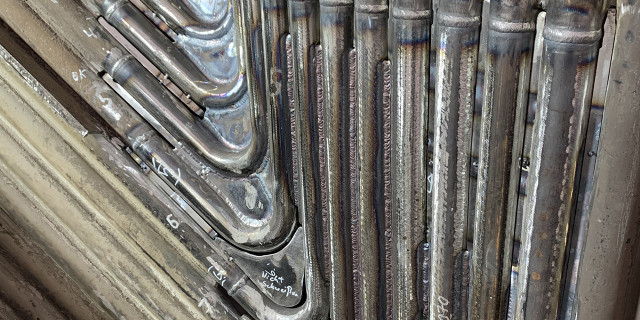
After the bending process, welding is often required to integrate the bent tubes into a complex assembly. The quality of the weld seam is crucial for the stability and leak-tightness of the entire assembly. There are various welding techniques, such as TIG welding, MIG/MAG welding, or laser welding, which are used depending on the material and requirements. Careful preparation of the weld joint, selection of the correct welding process, and the welder’s expertise are crucial for an optimal result. After welding, the assembly should undergo quality control to ensure it meets the required specifications. Pipe bending, followed by welding, is a complex process that requires precision and experience to ensure the highest quality standards. Bent pipes play a crucial role in this, particularly in water-cooled systems, water-cooled post-cooling systems for industry, and in the field of industrial cooling for the melting process. The pipe bending process itself is crucial for shaping the pipe correctly. KSK GmbH pays particular attention to the quality of the welds.
Practical Tips for Pipe Bending
Material selection for tube bending
Choosing the right material is crucial for the quality of the tube bending and the service life of the resulting assemblies. Different metals such as steel, stainless steel, aluminum, or copper have different properties regarding their formability and weldability. When selecting materials, factors such as strength requirements, corrosion resistance, and temperature should be taken into account. The chosen tube processing technique must be tailored to the material. Careful material selection helps ensure the highest quality standards and optimizes the efficiency of the bending process. KSK GmbH is happy to assist you in selecting the optimal material for your custom-made bent parts.
Optimization of the Bending Process
Efficient and precise tube bending requires careful planning and optimization of the bending process. This begins with the proper preparation of the tubes and profiles, including cutting and cleaning. The selection of the appropriate technique, such as mandrel bending or roll bending, depends on various factors, including the radius, wall thickness, and material. The parameters of our machines must be precisely adjusted to achieve the desired shape and minimize material deformation. Optimizing the bending process saves time and costs and improves the quality of the bent tubes. Tube bending itself is a complex process.
Avoiding Errors When Bending Tubes
Various defects can occur during tube bending that compromise the quality of the assembly. These include, for example, cracks, creasing, inaccurate radii, or deformation. To avoid these defects, careful preparation, the correct technique, and operator expertise are crucial. Regular maintenance of our machines also helps ensure precision and reliability. By detecting and resolving potential issues early on, costly rework can be avoided and the highest quality standards ensured. Pipe bending requires a high level of operator skill to prevent these errors.
Tube Bending in Industry
Industrial Applications of Pipe Bending
Tube bending is widely used in various industrial sectors. In water-cooled systems, water-cooled aftercooling systems for industry, and in the field of industrial cooling for melting processes, bent tubes are essential for efficiently conveying coolant and dissipating heat. Bent tubes are also required in mechanical engineering for hydraulic systems, pneumatic systems, and other applications. The ability to bend tubes according to specific drawings and manufacture custom-made bent parts enables the creation of complex assemblies that would not be possible with straight tubes. Bent tubes are an indispensable component of many industrial processes.
Water-Cooled Components and Their Importance
Water-cooled components play a crucial role in many industrial applications, particularly where high temperatures must be dissipated. The use of industrial cooling and water-cooled systems protects machines and equipment from overheating and extends their service life. Bent tubes form the heart of these cooling systems, as they efficiently direct the coolant to the heat-generating components. The quality of the tube bending is crucial for the reliability and efficiency of the cooling systems. KSK GmbH offers customized solutions for tube bending in water-cooled systems.
Case Studies: Tube Bending in Industrial Cooling
Tube bending plays a key role in the manufacture of efficient cooling systems for the melting process. A typical example is the cooling of induction furnaces, where high temperatures are generated. Bent tubes are used to precisely direct the cooling water to critical points and dissipate the heat. By optimizing the tube bends, the cooling performance and energy efficiency of the system can be improved. In another case study, bent tubes were used to significantly increase the cooling capacity of a water-cooled aftercooling system, thereby reducing production costs. Tube bending is a decisive factor in the performance of industrial cooling systems.
The Role of KSK GmbH in Pipe Bending
Overview of KSK GmbH
KSK GmbH is a well-established company in the industry, distinguished by its expertise in metal fabrication. Although KSK GmbH does not offer tube bending services itself, it utilizes bent tubes in its diverse mechanical processes and advises its customers on this matter. With years of experience and in-depth expertise, KSK GmbH has established itself as a reliable partner for demanding tasks. The company relies on the highest quality standards and innovative techniques to meet customer requirements. The company is a valued partner for a wide range of industries.
How KSK GmbH uses tube bending in its processes
KSK GmbH integrates bent tubes into its processes to create efficient and reliable water-cooled systems. Bent tubes are essential for precisely routing coolant and dissipating heat. The precision of the tube bending has a direct impact on the performance of the water-cooled recooling systems. KSK GmbH benefits from the flexibility of tube processing to develop custom solutions that are perfectly tailored to specific requirements. Tube bending enables the production of complex assemblies that would not be feasible with straight tubes. In the field of industrial cooling for melting processes, bent tubes are indispensable. Tube bending brings the tube into its optimal shape.
Collaboration and Partnerships in Tube Bending
KSK GmbH relies on long-term partnerships with specialized providers in the field of tube bending. This collaboration enables KSK GmbH to access a broad spectrum of expertise and resources. Through close cooperation, the highest quality standards can be ensured and innovative solutions developed. KSK GmbH benefits from its partners’ expertise in tube processing, enabling it to consistently offer its customers the best possible solutions. This strengthens KSK GmbH’s position as a reliable partner in the industry.
The Future of Pipe Bending
Innovations and Developments in Tube Bending
Tube bending is constantly evolving, driven by technological advances and the industry’s growing demands. New materials, improved techniques, and automated processes enable even more precise and efficient tube processing. The introduction of artificial intelligence and machine learning opens up new possibilities for optimizing the bending process and preventing errors. The development of simulation-based methods also contributes to improving the quality of tube bending and shortening development times. Tube bending is thus becoming an increasingly important component of modern manufacturing processes.
Sustainability and Efficiency in Tube Processing
Sustainability and efficiency are central themes in modern tube processing. Optimizing the bending process helps reduce material consumption and minimize waste. The use of energy-efficient machines and techniques lowers energy consumption and reduces environmental impact. The recycling of tube materials is also playing an increasingly important role. By implementing sustainable practices, companies such as KSK GmbH can not only improve their environmental footprint but also save costs and increase their competitiveness. In the future, tube bending will be increasingly focused on these aspects.
Outlook on Trends in Tube Bending
The future of tube bending will be shaped by a number of trends. These include increasing automation, the integration of digital technologies, the use of new materials, and a focus on sustainability. The demand for custom-made bent parts will continue to rise, requiring a high degree of flexibility and adaptability in bending processes. The importance of quality assurance and traceability will also increase. Companies that recognize these trends early and adapt to them will be able to strengthen their competitiveness and operate successfully in the industry. Tube bending will be an essential component.
Assembly
Maintenance
Warehousing & Spare Parts Storage
Kupfer schweißen
FAQs on Tube Bending
Table of contents
- What is tube bending and how does it work?
- What materials can be used for pipe bending?
- How are round tubes bent?
- What are the advantages of bent tubes in industry?
- How is the pipe bending process optimized?
- What is the difference between cold and hot pipe bending?
- How is pipe cutting integrated into the bending process?
- What role does tube bending play in the cooling process?
What is tube bending and how does it work?
Pipe bending is a process in which pipes are bent into various shapes to meet the specific requirements of different applications. Different technologies, such as cold or hot bending, are used to achieve the desired shape. The process is frequently used in industry, particularly in fields such as mechanical engineering, the automotive industry, and piping installation, to shape pipes for a wide range of applications. Precise pipe bending is crucial to ensure that the pipes are not only functional but also meet the necessary quality standards, thereby guaranteeing their durability and performance.
What materials can be used for pipe bending?
Various materials, such as steel, stainless steel, copper, and aluminum, can be used for pipe bending. The choice of material depends on the application and the specific requirements for strength and flexibility. In addition, the weight of the material also plays an important role, especially when the bent pipe is used in load-bearing structures or mobile applications. Steel, for example, offers high strength and durability but is heavier than aluminum and copper. Aluminum, on the other hand, is lighter and more corrosion-resistant but may not be suitable for applications that require high mechanical loads.
Stainless steel combines the advantages of steel and aluminum, as it offers both high strength and excellent corrosion resistance. These properties make stainless steel a preferred choice for applications in the chemical industry or construction, where resistance to aggressive environments is required.
Copper is often used in the plumbing and heating industries because it has excellent thermal conductivity and is easy to bend. It is well-suited for applications where temperature changes and thermal efficiency are critical.
The bending techniques themselves can vary depending on the material. While some materials can be cold-bent, others, such as thicker steel pipes, require the material to be heated to prevent cracking or deformation. Therefore, it is important to consider the specific properties of the chosen material to achieve the best results during bending.
In summary, selecting the right material and the appropriate bending technique is crucial for the quality and functionality of the final product. Taking into account factors such as strength, flexibility, weight, and corrosion resistance can help maximize the service life and efficiency of the bent tubes.
How are round tubes bent?
Round tubes are typically bent using specialized machines that allow for precise control over the bending process. The tube can either be bent in one piece or multiple bends can be made to achieve complex shapes. When bending pipes, it is important to consider the properties of the various materials to achieve an optimal result. Steel pipes generally offer high strength and are ideal for applications requiring a robust construction. Stainless steel pipes are corrosion-resistant and well-suited for environments where moisture or chemicals are present.
Copper pipes are easy to bend and have excellent thermal conductivity, making them ideal for heating and cooling systems. Aluminum pipes are lightweight and corrosion-resistant, making them a good choice for applications in transportation and aerospace where weight savings are important.
During the bending process itself, it is important to select the appropriate bending technology, such as mandrel bending, roll bending, or press bending, depending on the material properties and the desired bending parameters. Additionally, factors such as the bending radius, wall thickness, and the potential for material deformation must be taken into account to prevent cracks or wrinkling.
Furthermore, the use of lubricants or special tools may be necessary to reduce friction and improve the surface quality of the bent tube. In any case, careful planning and execution of the bending process are crucial to ensuring the integrity and performance of the bent tube.
What are the advantages of bent tubes in industry?
Bent tubes offer numerous advantages in industrial applications, including better use of space, a reduced number of joints, and improved flow efficiency in systems such as cooling or heating lines. Bent pipes are particularly important in industries such as the automotive, aerospace, and construction sectors. Their use enables the design of complex piping systems that adapt optimally to existing spatial structures. By reducing the number of joints, the risk of leaks is lowered, which both increases operational safety and reduces maintenance costs.
In addition, the improved flow efficiency achieved through gentle bends helps minimize pressure loss in the systems. This leads to lower energy consumption and can extend the service life of pumps and other components. In an era where sustainability and energy efficiency are becoming increasingly important, bent pipes thus represent a valuable solution.
Another advantage of curved pipes is their aesthetic appeal. In architectural applications, they can serve both functional and design purposes by creating seamless and flowing lines that give a building or structure a modern and dynamic character.
The manufacture of bent pipes requires specialized techniques and machinery to achieve precise bends without weakening the material. Advances in manufacturing technology, such as CNC bending, make it possible to produce pipes with high accuracy and repeatability, which further enhances the quality and reliability of the end products.
How is the pipe bending process optimized?
The bending process can be optimized by utilizing modern technologies such as computer-controlled machines, precise control systems, and automated manufacturing processes. These innovations help increase accuracy and efficiency in tube bending. They also enable faster adaptation to different material requirements and complex geometries. Through the use of sensors and real-time monitoring systems, errors can be detected and corrected early on, which reduces the scrap rate and improves the quality of the end products. Furthermore, these technologies help to shorten setup times and increase flexibility in manufacturing, which ultimately leads to cost savings. Another advantage of integrating modern technologies is the ability to network and analyze data, allowing production processes to be continuously optimized and adapted to changing market demands. This helps companies remain competitive while promoting sustainable production practices.
What is the difference between cold and hot pipe bending?
In cold bending, the pipe is bent at room temperature, whereas in hot bending, the material is heated to improve its bendability. Hot bending reduces the risk of cracks and deformation but is associated with higher energy costs. Additionally, hot bending can allow for improved control over the bending process, as the material can be shaped more easily when in a more ductile state. This is particularly advantageous for thick-walled or high-strength materials, which might be more prone to brittle fracture or springback at room temperature.
Another advantage of warm bending is the ability to achieve tighter bending radii, which may be necessary in certain applications to meet specific design requirements. By reducing stresses in the material, the mechanical properties of the final product can also be improved.
However, when performing warm bending, the potential change in material properties due to heating must also be taken into account. It is important to carefully control the process to avoid undesirable effects such as grain growth or a change in microstructure, which could compromise strength and corrosion resistance.
In practice, the choice between cold and hot bending is influenced by various factors, including the type of material, the required bend radius, production costs, and the specific requirements of the application. Engineers must carefully weigh these factors to determine the optimal bending process for their specific needs.
How is pipe cutting integrated into the bending process?
Pipe cutting can be performed before or after bending. It is crucial to cut the pipes to the correct length before bending them to ensure an optimal fit and functionality in the final product. When cutting the tubes before bending, it is important to take precise measurements and account for any shrinkage or expansion that may occur during the bending process. This can minimize material loss and preserve the integrity of the tubes. Careful planning and the use of appropriate tools, such as tube cutters or saws, are crucial for achieving clean and accurate cuts.
If cutting is performed after bending, care should be taken to ensure that the tube is properly clamped in the bending machine to prevent deformation. It may also be necessary to use special fixtures or clamps to ensure stability during cutting. After cutting, a thorough inspection should be conducted to ensure that the ends are smooth and free of burrs before the pipes are integrated into the final product.
Regardless of when the cutting process takes place, safety measures are essential. Safety goggles and gloves should be worn to prevent injuries, and all machines should be regularly maintained to ensure smooth operation.
What role does tube bending play in the cooling process?
Pipe bending plays a crucial role in the cooling process, particularly in water-cooled systems. By bending the pipes, cooling channels can be designed more efficiently, which improves heat dissipation and enhances the system’s performance. Furthermore, precise pipe bending allows for optimized adaptation to spatial constraints, thereby reducing space requirements and simplifying installation. A well-designed pipe routing minimizes pressure loss and ensures a uniform coolant flow, which in turn increases the efficiency of the entire cooling circuit.
Modern pipe bending techniques and tools, such as CNC bending machines, enable pipes to be formed with high precision and repeatability. This is particularly important in industrial applications, where deviations in pipe routing can lead to significant efficiency losses. Furthermore, the use of high-quality materials specifically developed for tube bending contributes to the durability and reliability of the systems.
Overall, pipe bending is a critical factor that influences not only thermal performance but also the total cost of ownership of a cooling system. Therefore, it should always be carefully considered during the planning and design of water-cooled systems.
