
Table of contents
KSK electric arc furnace.
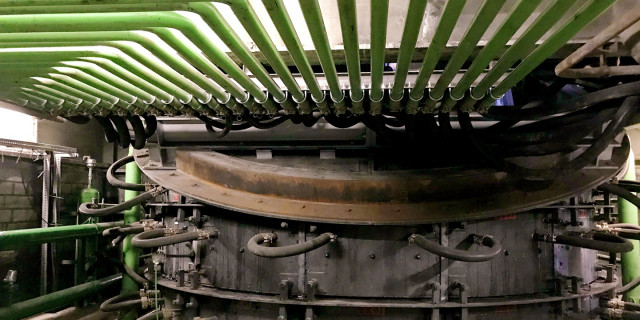
It all began at KSK in the 1980s with the electric arc furnace. We replaced the original refractory-lined lids and upper vessels of the electric arc furnace with our water-cooled tubular structures. And even today, much of our work in the field of melting and recycling processes revolves around the electric arc furnace, as it is in greater demand than ever in this era of green steel production.
Impressive plant engineering.
The key to economically successful operation lies not only in metallurgy but above all in the plant engineering used. This determines how long the repair phase for your electric arc furnace will take. And when the next repair shift will be, because, for example, the weld seam on the reversing cap of the third cover panel was welded without a root pass, contrary to the drawing. Wouldn’t it be nice to know that skilled fitters and welders in two small workshops in the heart of Germany would also take care of the root passes in your cover panel?
Intelligent designs.
Or that our dedicated team of engineers designs your electric arc furnace upper vessel in such a way that wall panels can be replaced with ease in just a few simple steps using a hall crane? Of course, our engineers also develop excellent technical solutions for other melting and recycling processes, such as shaft furnaces, SFA’s, rotary kilns, ladle furnaces, bath melting furnaces, pilot furnaces and other melting and recycling units, always in accordance with the six KSK quality criteria.
Your contacts
Dipl.-Ing. Olaf Huscher
Partner and Managing Director
+49 (0) 2364 10539-0
huscher@kskgruppe.de
Andreas Höwedes, MSc (Eng)
Partner and Managing Director
+49 (0) 2364 10539-0
hoewedes@kskgruppe.de
The KSK electric arc furnace in action
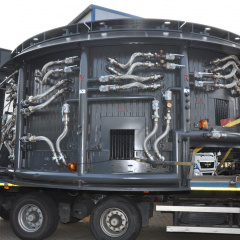
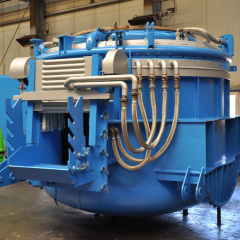
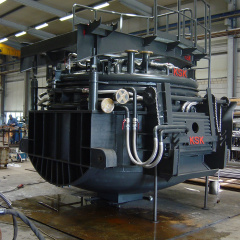
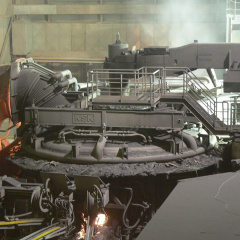
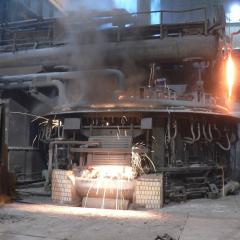
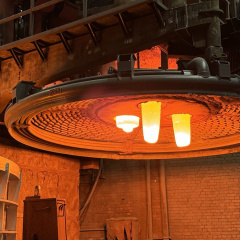
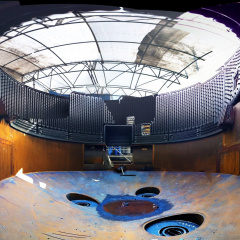
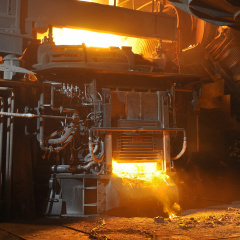
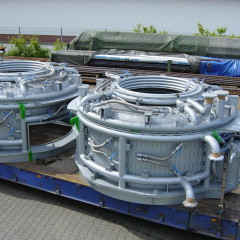
Table of contents
-
What is an electric arc
furnace and how does it work?
- Electric arc furnace: Efficient steel production in the electric arc furnace
- How is the arc generated in the furnace?
- What role do graphite electrodes play in the electric arc furnace?
- How does the electric arc furnace influence the steelmaking process?
What is an electric arc furnace and how does it work?
Electric arc furnace: Efficient steel production in the electric arc furnace
The electric arc furnace has established itself as one of the most advanced technologies in steel production by offering an efficient alternative to the traditional blast furnace process. This method of steel production uses electrical energy to achieve the high temperatures required for melting metals. The use of this technology not only makes steel production more cost-effective but also more environmentally friendly, as it facilitates the recycling of steel scrap.
How is the arc generated in the furnace?
The arc in the electric arc furnace is generated by the use of three (AC) or one (DC) graphite electrodes, which conduct the electric current. These electrodes are lowered into the furnace, causing a short circuit between the electrodes and the scrap or pig iron. As soon as the electric current flows through the electrodes, an arc is created which can reach temperatures of up to 3,500 °C. This extreme heat is necessary to melt the metal and start the steelmaking process.
What role do graphite electrodes play in the electric arc furnace?
Graphite electrodes are crucial to the functionality of the electric arc furnace. They act as conductors for the electric current and are capable of generating the extreme heat required to melt the metal. The electrodes wear down continuously and must be replaced regularly to ensure consistent performance. Their high conductivity and resistance to high temperatures make them an indispensable component of modern steel production.
How does the electric arc furnace influence the steelmaking process?
The electric arc furnace has a significant influence on the steelmaking process due to its ability to melt metals quickly and efficiently. Unlike the blast furnace process, which requires large quantities of coal and iron ore, the electric arc furnace can also use recycled scrap, leading to a reduction in raw material costs. Furthermore, the furnace allows for more precise control of the chemical composition, enabling the production of high-quality steel grades.
Why is the electric arc furnace important for modern steel production?
What advantages does the electric arc furnace offer over the blast furnace?
The electric arc furnace offers several advantages over the traditional blast furnace. One of the greatest advantages is the ability to make efficient use of recycled steel scrap, which reduces both costs and environmental impact. Furthermore, the electric arc furnace requires less space and can be brought up to temperature more quickly, leading to increased flexibility in production. The ability to precisely control the temperature also improves the quality of the steel produced.
How does the electric arc furnace contribute to efficiency in steel production?
The efficiency of the electric arc furnace in steel production is particularly evident in the reduction of energy consumption and production costs. By using electrical energy instead of fossil fuels, energy consumption can be reduced. The flexibility to switch the furnace on and off quickly enables companies to respond rapidly to market demands, which optimises production planning and reduces inventory costs.
What are the environmental impacts of using electric arc furnaces?
The environmental impact of using electric arc furnaces is significantly lower compared to traditional methods. The ability to use large quantities of recycled scrap reduces dependence on natural raw materials such as iron ore. Furthermore, the lower consumption of fossil fuels leads to reduced CO2 emissions, which significantly reduces the environmental impact of steel production.
How is recycled scrap used in an electric arc furnace?
Why is the recycling of steel scrap in the electric arc furnace crucial?
The recycling of steel scrap in the electric arc furnace is crucial for the sustainability of steel production. Scrap offers a cost-effective and environmentally friendly alternative to traditional raw materials. Reusing scrap reduces the need for new iron ore and coal, which lowers both the costs and the environmental impact of steel production.
How is recycled scrap processed in an electric arc furnace?
Recycled scrap is processed in the electric arc furnace by being charged into the furnace and then melted by the arc generated. During the melting process, oxygen is added to remove impurities and control the chemical composition of the steel. This method makes it possible to produce a wide variety of steel grades tailored to the specific requirements of industry.
What role does scrap play in the production of molten steel?
Scrap plays a central role in the production of molten steel in the electric arc furnace. By melting scrap, molten steel can be produced, which is then further processed into various products. The use of scrap not only enables cost-effective production but also contributes to reducing emissions and promoting a circular economy.
Which companies rely on electric arc furnaces, and why?
Which companies use this technology?
There are numerous companies worldwide, such as Georgsmarienhütte, Peiner Träger, Lech Stahlwerke, Aperam, ArcelorMittal, etc., that are reaping the benefits of electric arc furnace technology. These companies have recognised that the use of electric arc furnaces not only offers economic advantages but also contributes to the sustainability of the steel industry. Many of these companies have adapted their production processes to maximise the use of recycled scrap and improve the efficiency of their steel production.
What economic benefits do electric arc furnaces offer businesses?
Electric arc furnaces offer companies significant economic benefits, including reduced raw material and energy costs. As these furnaces are primarily powered by electricity, companies can benefit from lower energy costs, particularly in regions with favourable electricity prices. The ability to respond quickly to market changes enables companies to organise their production schedules flexibly, thereby reducing inventory costs. Furthermore, the option to use recycled scrap opens up new sources of revenue and contributes to increased profits.
How does temperature affect steel production in an electric arc furnace?
What temperatures are reached in an electric arc furnace?
Extremely high temperatures are reached in the electric arc furnace, which can reach up to 3,500 °C. These high temperatures are crucial for the efficient melting of the metal and the removal of impurities. The ability to generate such temperatures enables the electric arc furnace to melt a wide range of metals and produce various grades of steel.
How does temperature affect the melting of metal?
The temperature in the electric arc furnace plays a crucial role in the melting of the metal. Higher temperatures accelerate the melting process and improve the efficiency of steel production. By precisely controlling the temperature, impurities can be efficiently removed and the chemical composition of the steel can be precisely adjusted. This results in higher quality steel and enables the production of special steels that meet specific requirements.
Why is temperature control crucial for the quality of the steel produced?
Temperature control in the electric arc furnace is crucial for the quality of the steel produced, as it influences the chemical composition and physical properties of the steel. Precise temperature control makes it possible to minimise impurities and achieve the desired properties of the steel. This is particularly important for the production of high-quality steel used in demanding applications where material properties are critical.
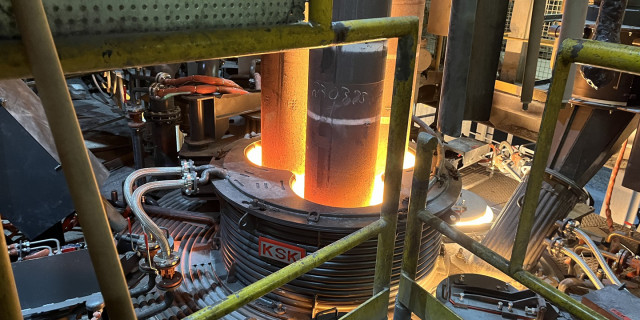
Ladle Furnace
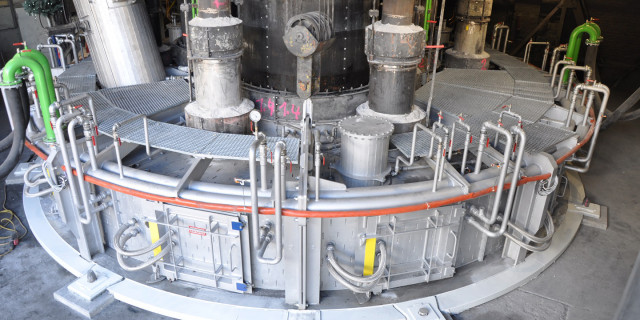
Submerged Arc Furnace
Exciting and interesting facts about the electric arc furnace
Table of contents
- What makes the electric arc furnace unique?
- How does the electric arc furnace contribute to achieving the EU’s climate targets?
- What types of steel are produced in the electric arc furnace?
- How much electricity does an electric arc furnace require?
- How does an electric arc furnace work?
- What is the advantage of the electric steelmaking process?
- What happens in a steelworks?
What makes the electric arc furnace unique?
Although we see ourselves as plant and equipment manufacturers, our 40 years of experience in the electric steelmaking process mean we also have a thorough understanding of the electric arc furnace from both a process engineering and metallurgical perspective. We would be happy to discuss further questions with you beyond the scope of water cooling, or put you in touch with a reputable partner from our network who, like us, is an expert in a specific technology.
The electric arc furnace itself is a unit for melting steel scrap of various grades. Steel can be produced from iron ore via the blast furnace and converter route. However, it is more energy-efficient to melt it from steel scrap in an electric arc furnace using the electric steelmaking process. Following the electric arc furnace, the molten steel can undergo further metallurgical processing in other electric steelmaking processes, such as in secondary metallurgy in a ladle furnace.
Incidentally, induction is also an electric steelmaking process in which we specialise. In this electric steelmaking process, however, our expertise is clearly limited to exhaust gas cooling. The situation is similar with other electric steelmaking processes, such as the bath melting furnace. We remain true to our motto here: “We do what we can and can do what we do”; we largely stay out of the metallurgy of this electric steelmaking process and concentrate on plant engineering, or in this case, furnace construction.
How does the electric arc furnace contribute to achieving the EU’s climate targets?
The electric arc furnace is a vital tool in the steel industry. It is a specialised furnace used for melting scrap and producing steel products. With its energy efficiency and the ability to produce clean and highly efficient steel products, the electric arc furnace makes a decisive contribution to meeting the EU’s climate targets.
A key element in the fight against climate change is the reduction of greenhouse gas emissions. The electric arc furnace is a vital tool for achieving this goal. It enables the production of steel with minimal energy consumption, thereby significantly reducing greenhouse gas emissions. Furthermore, higher-quality steel products can be produced, meaning less energy is required for their manufacture, which in turn leads to a further reduction in greenhouse gas emissions.
Another advantage of the electric arc furnace is that it offers a cleaner and more efficient method of producing steel. It uses a combination of electricity and gas to heat scrap, thereby reducing the use of fossil fuels in principle. This reduces emissions of pollutants and other harmful substances, which also contributes to reduced greenhouse gas emissions. The electric arc furnace is a key tool for a sustainable energy supply. It uses electricity, ideally from renewable sources such as wind or solar power, thereby enabling the steel industry to produce and use steel cleanly and efficiently. This makes a significant contribution to a sustainable energy supply whilst also helping to reduce greenhouse gas emissions.
The electric arc furnace is a powerful tool to help the steel industry achieve the EU’s climate targets. Thanks to its energy efficiency and the ability to produce clean and highly efficient steel products, the electric arc furnace makes a significant contribution to reducing greenhouse gas emissions and ensuring a sustainable energy supply. In this way, the steel industry can contribute to the implementation of the EU’s climate and environmental protection targets.
What types of steel are produced in the electric arc furnace?
Special steels, such as high-alloy tool steels, high-performance structural steels, high-grade structural steels, heat-resistant structural steels or low-grade steels, are generally preferred for the electric arc furnace. In addition, other special steels such as maraging steel, nitriding steel, cold-work steel, etc. are useful.
How much electricity does an electric arc furnace require?
An electric arc furnace is a key component in the steel and metal industry, as it offers the ability to heat large quantities of metal to very high temperatures. The energy requirements of an electric arc furnace depend on various factors, including the size of the furnace, the type of metal to be melted, the desired melting capacity and the efficiency of the furnace. However, electric arc furnaces generally require a considerable amount of electricity to reach the necessary temperatures. For a typical electric arc furnace, the power requirement can range from 500 kilowatts to several megawatts. This high electricity consumption makes operating an electric arc furnace a costly affair, particularly in view of continuously rising energy prices. The cost of electricity consumption can account for a significant proportion of total production costs, leading operators to strive to optimise energy consumption in order to reduce operating costs.
To optimise electricity consumption, many arc furnace operators rely on advanced technologies and processes that enable a more efficient use of energy. These include, for example, the implementation of heat recovery systems, which allow the heat emitted by the furnace to be used for power generation or for heating buildings. Furthermore, modern arc furnaces are often equipped with computer-controlled systems that allow energy consumption to be precisely monitored and controlled. This can help to optimise electricity consumption and improve the furnace’s energy efficiency.
Another approach to reducing electricity consumption is to switch to alternative energy sources that are more environmentally friendly and cost-effective. An increasing number of electric arc furnace operators are investing in renewable energies such as solar or wind power to reduce their reliance on conventionally generated electricity.
How does an electric arc furnace work?
Metals and other electrically conductive materials are melted in an electric arc furnace. The process of electric arc melting is based on the generation of an electric arc between the furnace electrodes. This arc heats the material inside the furnace to very high temperatures, causing it to melt. The electric arc furnace is frequently used in the metallurgical industry for the production of steel and other alloys. The melting process in the electric arc furnace allows for precise control of the melting temperature and the composition of the alloy. Furthermore, the specific properties of the end product can be influenced by adding various alloying metals. The electric arc melting process is also more energy-efficient compared to other melting methods, as it converts electrical energy directly into heat without the need for fossil fuels. By using recycled materials, the electric arc furnace can also contribute to the conservation of resources. Once the material has been melted in the electric arc furnace, it is cast into special moulds to achieve the desired final shape. The entire process in the electric arc furnace takes place under controlled conditions to ensure consistent quality of the end product. Furthermore, the arc furnace can also remove harmful substances and impurities from the material, resulting in a higher purity of the final product. The recycling of metallic waste is also an important application of the arc furnace, as the high temperatures within the furnace help to remove most impurities and make the recycled material usable again for the manufacture of new products. Overall, the electric arc furnace plays a vital role in metallurgy and the recycling of metallic materials, as it enables efficient melting processes and can help conserve resources and reduce environmental impact.
What is the advantage of the electric steelmaking process?
The electric steelmaking process offers numerous advantages that make it an attractive option for steel production. One of the most important advantages is the ability to produce high-quality steel with reduced CO2 emissions. Compared to conventional steelmaking processes, such as the blast furnace process, the electric steelmaking process produces significantly fewer emissions, which helps to reduce the negative impact on the environment. Furthermore, the electric steelmaking process enables more flexible production, as it can respond more quickly to changes in demand. This leads to improved adaptability and efficiency in steel production, which ultimately results in cost savings. Another advantage of the electric steelmaking process is the ability to produce a wide variety of steel grades, including high-alloy steel and special steels. This makes the process highly versatile and enables manufacturers to meet the specific requirements of their customers. Furthermore, the electric steelmaking process also offers benefits in terms of working conditions. Compared to other processes, there is less noise and air pollution, resulting in an improved working environment for employees. Overall, the electric steelmaking process offers an efficient, environmentally friendly and versatile method for producing steel, making it an attractive option for steel manufacturers. It is important that the industry recognises these benefits and increasingly considers the electric steelmaking process to reduce environmental impact and improve efficiency and flexibility in steel production. By opting for more sustainable and efficient methods of steel production, we can help protect our environment and ensure the long-term competitiveness of the steel industry.
What happens in a steelworks?
Many important processes necessary for the production of steel take place in a steelworks. First and foremost, raw materials such as iron, coal and limestone are processed in the blast furnaces to melt the iron and remove impurities. This process requires a very high temperature, often exceeding 1500 degrees Celsius. Once the iron has melted, it is cast into various moulds to give it the desired shape. The steel is then further processed through rolling, forging or other methods to improve its strength, hardness and other properties. Throughout the entire process, various machines and equipment play a vital role in ensuring production is efficient and safe. Furthermore, skilled workers and engineers are essential to ensure the smooth running of production and to guarantee the quality of the end product. Finally, compliance with strict environmental regulations is also a central component of the steelworks process, to ensure that the impact on the environment is kept to a minimum.
Apart from the mechanical and technical aspects, employee safety also plays a crucial role in a steelworks. Due to high temperatures, heavy machinery and chemical substances, there is always a certain risk of injury. It is therefore essential that strict safety protocols are followed and that employees receive regular training to prevent accidents. In addition, regular inspections and maintenance are carried out on the plant to ensure it operates safely and efficiently.
In addition to these technical and safety-related aspects, the economic significance of a steelworks also plays an important role. The steel industry contributes significantly to a country’s economy by creating jobs, supporting the growth of other industries and enabling major infrastructure projects. In many countries, steel production is an integral part of the economy and plays a key role in industrial development.
