
Table of contents
The KSK Ladle Furnace Lid
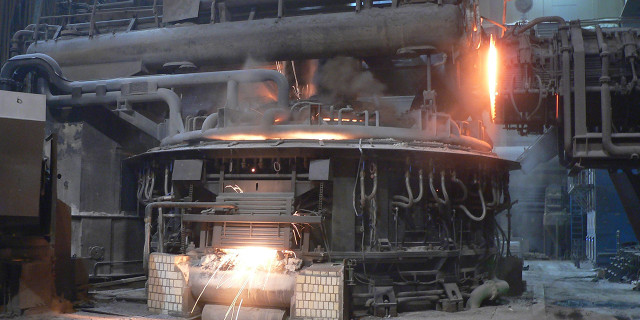
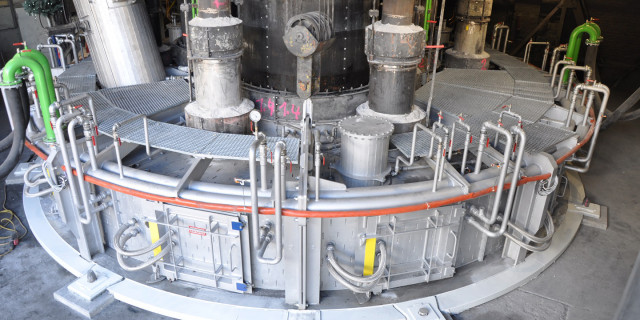
A ladle treatment unit is a complex assembly in the field of secondary metallurgy. At KSK, we focus on its very heart: the ladle furnace lid. It ensures the correct process atmosphere and many other components during the further treatment of molten steel.
Our own philosophy.
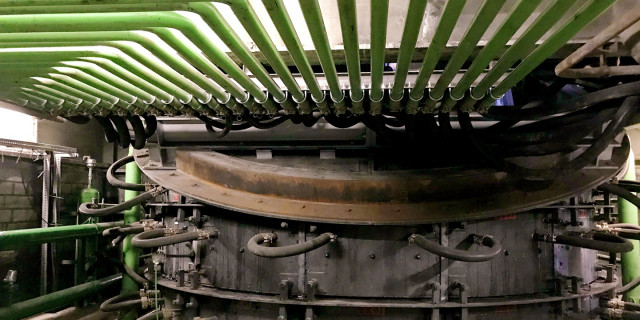
We follow our very own philosophy in the design of our ladle furnace lids. Our ladle furnace lids are water-cooled and consistently designed as tubular structures. We would be happy to explain exactly why in a personal discussion. Our most important design credo: Keep it simple! The design of cooling sections and water connections is detailed yet streamlined. This ensures your ladle furnace cover remains clear and straightforward, making it easy to maintain and service. And should you prefer a different design approach: of course, the customer is king with us.
Simulation is key.
Emission management in the ladle furnace is of particular importance and can be effectively controlled via edge extraction, side-draft hoods and the like. To ensure that the layout and design of the components match your metallurgical concept 100%, we are happy to simulate the flow of flue gas through our components in advance using CFD simulation, if required. This allows potential for optimisation and design adjustments to be identified quickly.
Innovative peripherals.
Your ladle furnace lid is much more than just a pipe structure! Are you looking for a lockable alloy opening that can still be opened and closed despite burn-on? Is your furnace chamber camera not robust enough for the process? Or are you constantly frustrated by wires sticking together when feeding in alloying agents? Then ask about our water-cooled hinged slides, our optimised furnace chamber camera or the KSK bayonet wire cutter (with telescopic function)!
What advantages do water-cooled systems from KSK System Kühl Technik GmbH offer?
How do these systems influence the ladle furnace process?
The innovative cooling systems from KSK System Kühl Technik GmbH have a positive impact on the ladle furnace process by maintaining a stable temperature and extending the service life of the system components. The improved cooling enables consistent process control and helps to increase production capacity.
Future prospects for ladle furnaces with innovative cooling technology
The future prospects for ladle furnaces with innovative cooling technology are promising. With the ongoing development of cooling systems and the integration of new technologies, the efficiency and quality of steel production are expected to increase further. These advances could significantly boost the competitiveness of steelworks and open up new markets.
Your contacts
Olaf Huscher, M.Eng.
Managing Partner
+49 (0) 2364 10539-0
huscher@kskgruppe.de
Andreas Höwedes, MSc (Eng)
Partner and Managing Director
+49 (0) 2364 10539-0
Table of contents
- Ladle furnace: A comprehensive overview
-
What is a ladle furnace and how does it work?
- Basics and operation of a ladle furnace
- Differences between ladle furnaces and electric arc furnaces
- The role of the ladle furnace in secondary metallurgy
Ladle furnace: A comprehensive overview
The ladle furnace plays a crucial role in modern steel production. As an essential component of secondary metallurgy, it is used to improve the quality and properties of steel. Through precise control of the temperature and treatment process, the ladle furnace enables the production of high-quality steel grades. In this article, we will examine how the ladle furnace works, its role in slag treatment, the importance of temperature control, and the benefits of innovative cooling systems from KSK System Kühl Technik GmbH.
What is a ladle furnace and how does it work?
Basics and operation of a ladle furnace
A ladle furnace is a metallurgical device used in secondary metallurgy for the treatment of molten steel. Unlike the electric arc furnace, which is mainly used for melting metal, the ladle furnace serves to further refine the melt and adjust the desired alloy properties. The operation of a ladle furnace is based on heating the melt, adding alloys and removing impurities such as sulphur and oxygen.
Differences between ladle furnaces and electric arc furnaces
Whilst the electric arc furnace (EAF) is primarily responsible for melting scrap and achieving high temperatures, the ladle furnace is used for downstream treatment. The ladle furnace allows for more precise control of the chemical composition and temperature of the melt. Unlike the EAF, which uses an intense arc to melt the metal, the ladle furnace utilises various openings for electrodes and alloy additions to refine the melt.
The role of the ladle furnace in secondary metallurgy
In secondary metallurgy, the ladle furnace is indispensable for optimising steel quality. It is used to desulphurise and deoxidise the molten steel and to add the desired alloys. The ladle furnace enables precise analysis and adjustment of the chemical properties of the molten steel, which is crucial for the production of special steels.
How is slag treated in the ladle furnace?
The desulphurisation and deoxidation process
The treatment of slag in the ladle furnace involves desulphurisation and deoxidation, which are crucial for improving steel quality. Through the use of alloying agents and the addition of argon, the slag is treated to bind sulphur and residual oxygen in the melt and remove unwanted impurities. This process contributes significantly to increasing the purity and quality of the end product by binding the residual oxygen in the melt.
Use of argon and other alloys
Argon is frequently used in the ladle furnace process to bind residual oxygen and aid deoxidation. By feeding in wire and other alloys, the chemical composition of the steel can be precisely adjusted. These measures help to achieve the desired mechanical properties and quality of the steel.
Influence of slag on the quality of the steel
The slag has a significant influence on the quality of the steel produced, particularly when used in a double-ladle furnace. Careful management of the slag in the ladle furnace can improve the purity of the steel and remove undesirable elements. By controlling the slag composition, the efficiency of desulphurisation and deoxidation can be increased, leading to a higher-quality end product , particularly when the molten steel is treated in a double-ladle furnace.
What role does temperature play in the ladle furnace process?
Heating the molten steel and controlling the casting temperature
Heating the molten steel in the ladle furnace is crucial for setting the correct casting temperature, particularly during the handling of molten steel in continuous casting plants. By precisely controlling the temperature, the fluidity of the steel during casting can be optimised, thereby improving the quality of the cast product. Precise temperature control is essential for achieving the desired properties of the steel.
Accurate temperature measurement and its importance
Accurate temperature measurements are essential for the operation of the ladle furnace. By using modern measurement techniques, the temperature can be monitored precisely to ensure that the steel is in the optimal condition for further processing. This enables better control of the entire process and contributes to improving product quality.
Sampling for monitoring temperature and quality
Sampling plays a vital role in monitoring the temperature and quality of the molten steel in the ladle furnace. By taking regular samples, the composition and temperature of the steel can be analysed and adjusted if necessary. This practice is crucial for ensuring consistently high product quality.
How does the ladle furnace improve the properties of the steel?
Treatment and analysis of molten steel
In the ladle furnace, the molten steel undergoes comprehensive treatment to improve its properties. Through analysis and the targeted addition of alloys, the chemical composition of the steel can be optimised. This leads to an improvement in the mechanical properties and the overall quality of the steel.
Feeding in wire and alloys for improvement
The feeding of wire and alloys is a key step in the ladle furnace process. This technique allows the desired alloying elements to be precisely introduced into the melt to achieve specific properties in the steel. This method enables the steel composition to be tailored precisely to the requirements of the end products.
Quality improvement through the use of aluminium
The use of aluminium in the ladle furnace process is crucial for improving the quality of the steel. Aluminium is used to bind residual oxygen in the melt and to aid deoxidation. This treatment results in a purer steel with improved mechanical properties.
What advantages do water-cooled plant systems from KSK System Kühl Technik GmbH offer?
How do these systems influence the ladle furnace process?
The innovative cooling systems from KSK System Kühl Technik GmbH have a positive impact on the ladle furnace process by maintaining a stable temperature and extending the service life of the plant components . The improved cooling enables consistent process control and helps to increase production capacity.
Future prospects for ladle furnaces with innovative cooling technology
The future prospects for ladle furnaces with innovative cooling technology are promising. With the ongoing development of cooling systems and the integration of new technologies, the efficiency and quality of steel production are expected to increase further. These advances could significantly boost the competitiveness of steelworks and open up new markets.
Bath Melting Furnace
Submerged Arc Furnace
FAQs on the topic of ladle furnace solutions
Table of contents
- Q: What is a ladle furnace and what is it used for?
- Q: How does a ladle furnace differ from an electric arc furnace?
- Q: What role does temperature play in the ladle furnace?
- Q: What materials are processed in the ladle furnace?
- Q: What is the significance of slag in the ladle furnace?
- Q: What is the function of the various openings in the ladle furnace lid?
- Q: How is desulphurisation carried out in a ladle furnace?
- Q: What role does KSK System Kühl Technik GmbH play in relation to ladle furnaces?
- Q: What is meant by secondary metallurgy in the context of a ladle furnace?
Q: What is a ladle furnace and what is it used for?
A: A ladle furnace is a key piece of equipment in the steel industry used for treating molten steel, featuring a lid with various openings. It serves to improve the quality and properties of the steel through processes such as desulphurisation, deoxidation and the addition of alloys. A ladle furnace is an important piece of equipment in the steel industry used for treating molten steel. It serves to improve the quality and properties of the steel through processes such as desulphurisation, deoxidation and the addition of alloys.
The process begins by pouring the molten steel from the converter or electric arc furnace into the ladle. In the ladle furnace, the steel is brought to the desired temperature and maintained at that level. This is crucial to enable the chemical reactions that lead to the desired refinement of the steel.
Another important aspect of ladle furnace treatment is the control of the steel’s chemical composition. This is achieved by adding alloying elements via an alloying port to achieve specific properties, such as increased strength, toughness or corrosion resistance. Such alloys may include elements such as manganese, nickel, chromium or vanadium.
Desulphurisation is a crucial process in the ladle furnace, in which the sulphur content in the steel is reduced. This is important as sulphur increases the brittleness of the steel and can impair its mechanical properties. By adding lime and other desulphurising agents, the sulphur is bound and removed as slag.
Deoxidation is another critical step in which oxygen is removed from the molten steel. This is achieved by adding deoxidising agents such as aluminium or silicon, which react with the oxygen to form oxides that can then be skimmed off to deoxidise the molten steel.
In addition to chemical treatment, the ladle furnace also enables the homogenisation of the steel’s temperature and composition, contributing to consistent quality in the final product. The use of stirring systems, such as electromagnetic or gas stirring, ensures an even distribution of temperature and alloying elements throughout the entire volume of steel.
Overall, the ladle furnace plays a crucial role in the modern steelmaking process by optimising the quality, consistency and specific properties of the final product, particularly through the treatment of molten steel. It enables manufacturers to respond to the industry’s increasing demands regarding material properties and quality.
Q: How does a ladle furnace differ from an electric arc furnace?
A: Whilst an electric arc furnace is mainly used for melting scrap and the initial production of molten steel, the ladle furnace is used in secondary metallurgy for the further treatment and quality improvement of the molten steel. In the ladle furnace, alloying elements and other additives are specifically added to the molten steel to achieve specific material properties. Furthermore, the temperature of the steel is precisely controlled to ensure the desired physical and chemical properties. Degassing processes can be carried out to remove undesirable gases such as hydrogen, nitrogen and oxygen, which significantly improves the quality of the end product.
Another important aspect of the work in the ladle furnace is the homogenisation of the steel, achieved by stirring the molten steel to ensure an even distribution of the alloying elements. Furthermore, deoxidation and desulphurisation processes can reduce the oxygen and sulphur content in the steel, which increases the purity and strength of the steel whilst the melt is being treated in the ladle furnace.
Overall, the ladle furnace plays a crucial role in meeting the specific requirements and standards for various steel grades needed in different industries, such as the automotive industry, mechanical engineering or the construction sector.
Q: What role does temperature play in the ladle furnace?
A: The temperature in the ladle furnace is crucial, as it influences the pouring temperature of the molten steel. Precise heating of the melt is necessary to achieve the desired quality and fluidity of the steel. Furthermore, temperature control plays a vital role in minimising energy losses and preventing thermal stresses in the material, particularly when the molten steel is being treated. An optimally controlled temperature profile in the ladle furnace ensures that the steel achieves its desired microstructure and mechanical properties.
To achieve this, advanced control systems and sensors are employed, enabling continuous monitoring and adjustment of the temperature. These systems can detect temperature deviations at an early stage and correct them automatically to ensure consistent quality of the end product, particularly when using aluminium-coated wire.
In addition, it is important to ensure temperature homogeneity throughout the melt. This is often achieved through the use of stirring techniques or by adding alloying elements that improve heat distribution. Uniform temperature distribution helps to minimise inclusions and other irregularities in the steel.
Overall, precise temperature control in the ladle furnace is a crucial factor for the efficiency and quality of steel production, particularly when the ladle furnace is treating the melt. It influences not only the physical and chemical properties of the steel, but also the cost-effectiveness of the entire production process.
Q: What materials are processed in the ladle furnace?
A: The ladle furnace is primarily used to treat molten steel. Alloying elements and other materials, such as aluminium, are added to improve the properties of the steel. In the ladle furnace, the temperature of the molten steel is precisely controlled to achieve the desired properties. By adding alloying agents, specific properties such as hardness, toughness and corrosion resistance of the steel can be improved. Aluminium is frequently used to reduce the oxygen content in the steel, as it acts as a deoxidiser.
In addition, the ladle furnace can be used to homogenise the alloying elements and fine-tune the chemical composition. Stirring the molten steel evens out differences in temperature and concentration, resulting in a consistent quality of the final product.
Modern ladle furnaces are often equipped with technologies that facilitate process monitoring and control, such as sensors for temperature measurement and computer-aided systems for controlling the addition of alloying agents. These technologies help to increase the efficiency of the process and ensure the quality of the steel produced, representing an important investment in the future of steel production.
Q: What is the significance of slag in the ladle furnace?
A: Slag plays an important role in the ladle furnace process as it can bind and remove impurities. It helps to purify the melt and improve steel quality. The slag acts as a kind of filter that absorbs unwanted elements such as sulphur and phosphorus. By forming a protective layer on the surface of the melt, it also prevents the metal from oxidising, which is particularly important when the molten steel is being treated. During the ladle furnace process, the composition of the slag is carefully monitored and adjusted to ensure it possesses the desired properties and can function effectively.
Another important function of the slag is thermal insulation. It helps to maintain a constant temperature of the molten steel, thereby saving energy and making the process more efficient. By regulating the temperature and minimising heat loss, the slag helps to lower production costs and reduce the environmental impact.
In addition, the slag can contribute to deoxidation in the ladle furnace process by removing oxygen from the melt. This is particularly important for ensuring the quality of the end product, as excess oxygen can lead to undesirable chemical reactions that impair the strength and durability of the steel.
Once the process is complete, the resulting slag can be further processed and used in other industries, such as road construction or cement production. This makes the use of slag not only functional but also sustainable, as it helps conserve resources and prevent waste, whilst simultaneously binding the residual oxygen in the melt.
Q: What is the function of the various openings in the ladle furnace lid?
A: The various openings in the ladle furnace lid are used for inserting electrodes, adding alloying agents and taking samples. They enable precise control and adjustment of the melt properties. Furthermore, they allow gases to escape, thereby preventing the build-up of excess pressure inside the furnace, which enhances safety during the melting process. The precise arrangement and size of the openings are crucial for achieving the desired metallurgical properties and ensuring the quality of the end product. In modern ladle furnaces, these openings can also be fitted with sensors that continuously provide data on temperature, composition and other relevant parameters, enabling even more precise control of the melting process. Such technologies contribute to increased efficiency and a reduction in energy consumption and emissions, offering both economic and environmental benefits.
Q: How is desulphurisation carried out in a ladle furnace?
A: Desulphurisation in the ladle furnace is carried out by feeding in materials such as wire or argon, which bind sulphur compounds and remove them from the melt to improve the quality of the steel. In addition, a lime or calcium mixture is often added, which also helps to bind sulphur. The desulphurisation process is crucial for improving the mechanical properties of the steel and ensuring its suitability for various applications. Reducing the sulphur content increases the steel’s ductility and minimises the risk of cracks and brittle fractures.
In addition to desulphurisation, other refining processes can also take place in the ladle furnace, such as the addition of alloying elements to adjust specific properties of the steel. The use of a ladle furnace enables precise control of the chemical composition and temperature of the melt, resulting in higher product quality.
Overall, the ladle furnace plays a central role in modern steel production, as it offers flexibility and efficiency in the refining of steel.
Q: What role does KSK System Kühl Technik GmbH play in relation to ladle furnaces?
A: KSK System Kühl Technik GmbH is a supplier of water-cooled ladle furnaces. The innovative cooling systems from KSK System Kühl Technik GmbH are characterised by their high energy efficiency and reliability. They are designed to meet the requirements of modern industrial processes and help to reduce operating costs and extend the service life of the equipment. The company offers bespoke solutions tailored to the specific needs of its customers and supports them with a comprehensive range of services, ranging from planning and installation to maintenance and optimisation. By utilising state-of-the-art technologies and materials, KSK System Kühl Technik GmbH ensures that its products meet the highest quality and safety standards.
Q: What is meant by secondary metallurgy in the context of a ladle furnace?
A: Secondary metallurgy in the ladle furnace encompasses all processes following melting in the electric arc furnace. These include the precise analysis and adjustment of alloys, deoxidation, and the improvement of steel quality through targeted treatment. After melting in the electric arc furnace, the molten steel is transferred to the ladle furnace, where secondary metallurgy and the treatment of the molten steel take place. At this stage, targeted adjustments are made to achieve the desired properties of the steel.
An important step is the precise analysis of the steel’s chemical composition. Samples are taken and analysed using spectrometers to ensure that the alloying elements fall within the desired range. If adjustments are necessary, alloying elements are added in precise quantities to optimise the composition.
Deoxidation is another key process in the ladle furnace. The addition of deoxidants such as aluminium or silicon reduces unwanted oxygen compounds, thereby increasing the purity of the steel. This is crucial to prevent the formation of inclusions that could impair the mechanical properties of the steel.
In addition, measures to improve steel quality can be carried out in the ladle furnace. These include vacuum treatment to remove gases such as hydrogen and nitrogen, as well as the addition of calcium to alter the form of sulphide inclusions and improve the machinability of the steel.
Finally, the temperature of the steel is precisely controlled to prepare it for the subsequent casting process. Secondary metallurgy in the ladle furnace is a crucial step in producing steels with specific properties for various applications, whether in the construction industry, the automotive sector, or the manufacture of machinery and tools.
